Blog Health and Wellbeing What is Cohesive Bandage and what can I use it for?

What is Cohesive Bandage and what can I use it for?

A person sits on a bench in a gym with an arm wrapped in a bandage, surrounded by rolls of tape. The text reads "Injury and Prevention."

Cohesive bandage is a versatile, elasticated bandage that sticks to itself rather than directly to the skin. This makes it a popular choice for sports teams, coaches, first aiders, and athletes. They need a secure, flexible wrap that removes easily and does not pull on skin or body hair.

Designed to stretch and conform to the body, cohesive bandage can be used for a variety of applications, from securing protective equipment to holding dressings and cold packs in place. Its flexibility allows it to adapt to different body areas, while the self-adhering material helps keep the bandage securely in position without the need for clips or additional fastenings.

The level of compression and support depends on the product, the number of layers applied and the tension used during application. It is important to apply the bandage evenly and avoid excessive tension, as wrapping it too tightly can restrict blood circulation.

What Can I Use Cohesive Bandage For?

Cohesive bandage has a wide range of uses in sport and first aid. Its flexibility and ability to stick to itself make it particularly useful when a secure wrap is needed without applying adhesive directly to the skin.

Common uses include:

  • Securing sports socks and shin pads: Popular in football, cohesive bandage can help hold socks and shin pads in position during training and matches.
  • Supporting minor injuries: It can provide light compression and support around areas such as fingers, wrists and ankles. However, it should not be used as a substitute for appropriate assessment or rigid support when an injury requires it.
  • Securing dressings: Cohesive bandage can help keep a suitable dressing in place. It should not be applied directly to an open wound unless the specific product is designed for that purpose.
  • Holding cold or heat packs in place: It can help secure a pack over an affected area, provided the wrap is comfortable and does not restrict circulation. Follow the pack manufacturer's instructions and avoid direct contact between extreme temperatures and the skin.
  • Securing protective equipment: In some sporting applications, cohesive bandage can be used to help keep protective equipment in position, including goalkeeper finger protection and rugby ear guards, where permitted by the relevant sporting regulations.
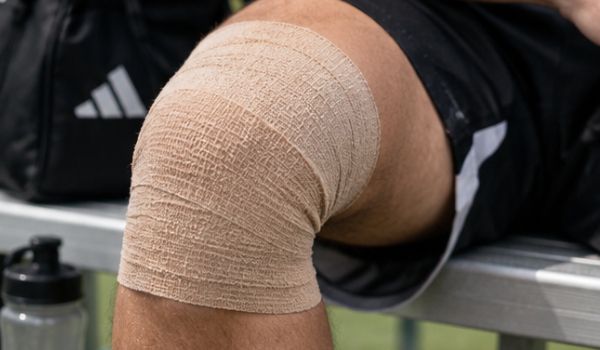
A knee wrapped in beige medical bandage, resting on a bench with a sports bag and water bottle nearby.

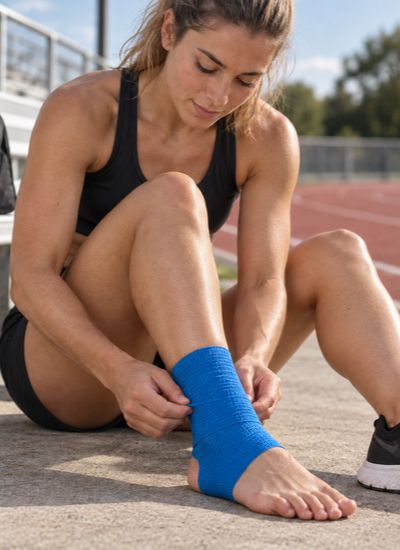
When using cohesive bandage around an injured ankle or another joint, avoid applying excessive tension, particularly where swelling may develop. Additional layers may improve coverage and help the bandage stay in place, but they should not be used to create excessive compression.

Always check the area beyond the bandage for changes in colour, temperature, sensation or comfort. If the fingers or toes become cold, pale, blue, numb or tingly, or pain increases, remove or loosen the bandage immediately.

What Are the Benefits of Using Cohesive Bandage?

Cohesive bandage offers several practical benefits that make it a useful addition to a sports first aid kit.

1. Stays securely in place

Unlike conventional adhesive tape, cohesive bandage adheres to itself rather than relying on glue to stick to the skin. This helps it remain in position during use while allowing it to be removed without pulling directly on body hair.

2. Flexible and adaptable

Its elastic construction allows the bandage to conform to different body shapes and sporting equipment. The level of stretch and compression can be adjusted during application, although care must be taken to avoid wrapping too tightly.

3. Easy to tear and apply

Many cohesive bandages can be torn by hand, making them convenient for use on the pitch, in the changing room or during first aid situations. Depending on the product, the bandage can be torn across its width or along its length, reducing the need for scissors.

4. No additional fastenings required

Because cohesive bandage sticks to itself, it generally does not require clips or separate fasteners to secure the end. Simply press the final layer against the underlying bandage to help it stay in place.

5. Can be repositioned during application

If the bandage is applied incorrectly, it may be possible to unwrap and reposition it. Whether it can be reused depends on the specific product's instructions, its condition and how it has been used. Discard bandages that are contaminated, damaged or unsuitable for reuse, and follow the manufacturer's guidance.

A woman sitting on the ground by a track, wrapping a blue bandage around her ankle with focused attention.

Choosing the Right Cohesive Bandage

When selecting cohesive bandage, consider the width, stretch, intended use and any specific product instructions. Narrower bandages can be useful for fingers and smaller areas, while wider options may be more suitable for securing sports equipment or wrapping larger areas.

For sports teams, coaches, and first aid kits, a cohesive bandage is a practical and versatile option. It helps secure equipment and dressings. Used appropriately, it can help keep essential protective and first aid items in place throughout training and competition.

Explore the Firstaid4sport range of cohesive bandages to find an option suitable for your sporting needs.